article
Culture and Technologies of Control
Introduction to the cultural intelligence manual "Tactical Reality Dictionary"

Introduction to the cultural intelligence manual "Tactical Reality Dictionary"
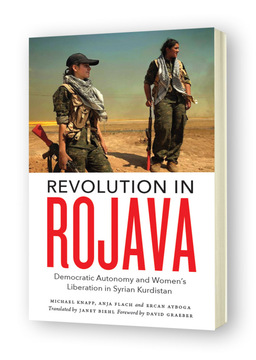
An interview with a Syrian activist in exile, code-named Sami, published by Occupy.com draws attenton once more to the radical experiment in real-life bottom-up matriarchal democratic design unfolding against all odds in the autonomous Kurdish region of Rojava in Northern Syria. We are republishing two short texts here on this subject matter to speculate about the question if 'Rojava' could offer a repeatable model for post-governmental political design?
Ausgestrahlt im Deutsch-Franzoesischen Kulturkanal ARTE November 1995.
In den fuenfziger Jahren hat Albert Einstein gesagt, dass wir es mitdrei Bomben zu tun haetten. Die erste, die Atombombe, sei bereitsgezuendet. Die zweite sei die Informatikbombe; die dritte, dieBevoelkerungsbombe, werde im 21. Jahrhundert explodieren. Gegenwaertigexplodiert die Informatikbombe. Neue Technologien, insbesondere dieMoeglichenkeiten zur Schaffung virtueller Welten, veraendern Kultur,Politik und Gesellschaft grundlegend. Zu diesem Thema diskutieren heuteabend im Gespraech der Stadtplaner und Philosoph Paul Virilio undFriedrich Kittler, Medienspezialist an der Humboldt Universitaet inBerlin.
Unshackle the Human Spirit!
The most precious natural resource is human spirit. A close second is
human imagination. Spirit and imagination will do more than oil, gold
and guns to determine the fate of the human experiment on Earth, an
experiment that has never been as precarious as it is today.
WIKILEAKS deserves protection, not threats and attacks.
ReadA collaborative, activist and conceptual art work of the net
Florian Schneider is a filmmaker, writer, and developer in the fields of new media, networking and open source technologies. In his work he focuses on bordercrossings between mainstream and independent media, art and activism, theory and technology.
ReadWikiLeaks publishes the Saudi Cables
Today, Friday 19th June at 1pm GMT, WikiLeaks began publishing The Saudi Cables: more than half a million cables and other documents from the Saudi Foreign Ministry that contain secret communications from various Saudi Embassies around the world. The publication includes "Top Secret" reports from other Saudi State institutions, including the Ministry of Interior and the Kingdom's General Intelligence Services. The massive cache of data also contains a large number of email communications between the Ministry of Foreign Affairs and foreign entities. The Saudi Cables are being published in tranches of tens of thousands of documents at a time over the coming weeks. Today WikiLeaks is releasing around 70,000 documents from the trove as the first tranche.
Ten years ago, there were few online activists and they believed that "cyberspace" was all theirs, a territory from which to emerge anywhere, outflanking the lumbering second-wave dinosaurs responsible for the Cold War and its successor, the McWorld. In the future that actually unfolded, the dinosaurs learned to boot up computers, connect to the Internet and post Web pages, or pay someone to do all this for them. What was a poor online activist to do? Even the son of Slobodan Milosevic has a Web site, to promote his Belgrade dance club.
As a playful, do-it-yourself approach to media activism and new technologies, tactical media (TM) seemed to have some critical bite when it emerged in the mid-1990s. But is it still radical today?
Read